Will AI kill software?
Boyd Davis, CEO Payfederate
Just over 3 years after the launch of ChatGPT, a very clear narrative has emerged that AI will kill the software industry as we know it. Developers are at peril because Claude can create applications easily. Software firms will go out of business or dramatically downsize. Business professionals will become vibe coders, creating on the fly agents at will to automate. I’ve been at the forefront of technology for over 35 years, and this narrative hasn’t resonated with me. Something big is clearly going on, but the hype has definitely outpaced the reality. As the CEO of a SaaS startup, the question is existential for me, and I’d like to share what I’ve concluded.
As a bit of background, I started my career in 1990 at Intel. The start of my career was the pinnacle of the personal computing revolution, which coincided with the shift in application architecture from mainframe/mini to client/server. I watched the emergence of the internet/cloud, followed by the rise of mobile computing, followed by the emergence of big data. These are the major shifts of our lifetime. Each (client/server, internet, mobile, and big data) were transformative. Each was also a critical precursor to modern machine learning and large language models.
In each transition, there has been massive displacement. New companies thrived and traditional players faltered. However, the overall market for and impact of technology has been steadily growing. Through it all, the demand for advancement has outstripped any capacity of technology. Let me give you a small example from my time leading data center chip marketing. Prior to the emergence of cloud computing, most servers in the world were utilized less than 10%. Cloud computing offered a discontinuity, where server utilization could increase 10X. Combined with Moore’s Law doubling performance every 2 years, we were genuinely worried that we’d deliver too much compute capacity for the demand. What actually happened? Intel was disrupted by Nvidia, who ended up delivering even more compute capacity at an even lower price. Fast forward and Nvidia is worth $4T+, and hardware still can’t keep up.
Will AI impact jobs? That is inevitable. In any transition, there are winners and losers. In a transition as big as this, there will be more and bigger winners and losers. However, there is not a shred of doubt in my mind that the opportunities made possible by AI will be positive, – on employment, on the growth of the economy, and on the impact to human lives.
Is software as an industry one of the big losers in the transition? It could still be true that AI is accretive to employment, but that software companies are a casualty. Anthropic, OpenAI, xAI and others can simply provide an agent foundation, and applications of any type (SaaS or otherwise) will become less common as people spin their own. Most of us using AI day to day have lots of little epiphanies about how tools can impact our personal productivity. We can all read anecdotes about comp professionals vibe-coding a solution for a merit cycle recommendation tool or a survey job matching tool. I must conclude it’s possible that DIY in the age of AI will impact software revenue.
Having said that, make vs. buy has always been a consideration in enterprise software, and most software vendors are way more advanced in their understanding and use of technology than enterprises are. We have all the tools available to end users, with a whole lot more. We were also born in the age of AI – our team is tiny, and we have zero sales development reps. We won’t raise a ton of money just to spend it on marketing fluff. AI enables people with the problem we solve to find us, and us to serve those customers with extreme efficiency. In short, we’re designed as a company for the software market of the future.
So what’s my conclusion? AI will put employees out of work and companies out of business. AI will simultaneously drive employment and create new companies. Those that thrive will have a few characteristics:
1) Companies will be extremely lean, focused on their core differentiation
2) Software will be AI-native, meaning designed from the ground up for AI
3) Solutions will be more complete – governance, security, permissions, integrations, workflow orchestration
My biggest suggestion for users: stay agile. Avoid 3-year software contracts. AI should make switching costs lower and you want to avoid lock-in. For rewards professionals, separate the decisions on market data (which is an ingredient) from the tools you use to manage pay.
I encourage experimentation and vibe-coding for total rewards professionals. Our profession has been leaders in HR analytics for decades using Excel, which in many cases gets way more complex than Claude or the alternatives. Once a rewards professional sees the individual productivity gains, they’ll be in a better position to adopt an enterprise solution like Payfederate.
Payfederate Expands Access to Trusted Market Data with Salary.com’s CompAnalyst®
Boyd Davis, CEO, Payfederate
At Payfederate, we believe great compensation management begins with two essentials: precise data and intelligent software. Our mission has always been to bring those together in a way that helps compensation leaders, HR teams, and consultants make better decisions with speed and confidence.
That’s why I’m pleased to share that Salary.com’s CompAnalyst® Market Data (CAMD) is now available directly within the Payfederate platform.
Why Market Data Matters
The labor market has shifted dramatically. Pay transparency regulations, evolving salary ranges, and the growing demand for career progression clarity are pushing organizations to rethink how they approach compensation. The foundation of a sound compensation strategy is trustworthy, validated market data. Without it, even the most advanced compensation management software risks being built on sand.
CompAnalyst Market Data is one of the most established and respected datasets available today. With contributions from more than 25,000 organizations each year and coverage of over 15,000 benchmark jobs, it provides the depth and accuracy compensation leaders rely on. For companies currently working with free sources or partial salary surveys, CAMD offers a meaningful upgrade in precision and consistency.
Bringing Data and Software Together
Payfederate already supports hundreds of data sources, from custom compensation surveys to specialized industry benchmarks. Best practice is not to rely on a single dataset but to blend insights across multiple inputs. CAMD is an important addition, and we expect it will be especially valuable for organizations that want a ready-made, HR-vetted dataset to pair with their compensation management workflows.
Inside Payfederate, CAMD is not just raw data. Our platform applies AI for human resources to make market data actionable—automating job leveling, aligning job architectures, and generating pay ranges that reflect the realities of both internal equity and external competitiveness. Whether you are designing performance based compensation, developing a skills based compensation model, or rethinking career architecture, the integration ensures that the market intelligence is right where decisions are made.
What This Means for Our Customers
For our customers, this integration is about choice and simplicity. You no longer need to purchase comp software from one vendor and compensation surveys from another, then invest time in manual data ingestion. With Payfederate, the comp tool and the data work together. That means faster time to insight, stronger compensation benchmarking, and less friction in building structures that support career mapping, pay transparency, and sustainable talent management.
We are proud to begin with CAMD. It represents one of the strongest compensation benchmarking resources available, and it reflects our belief that compensation leaders deserve both flexibility and precision. This is only the beginning; we expect to share more announcements soon as we continue to expand the range of datasets available within the platform.
Looking Ahead
The future of compensation strategy will demand even closer alignment between technology, compensation consulting expertise, and market intelligence. At Payfederate, we are committed to building a platform that supports that alignment; empowering compensation leaders to manage pay compression, benchmark with confidence, and design career stages and salary ranges that stand up to both market scrutiny and employee expectations.
Compensation is no longer just an HR function. It is a core part of talent management, business strategy, and organizational trust. With this integration, we are making it easier than ever to deliver on all three.
Ready to see how Payfederate and CAMD can strengthen your compensation strategy?
Get in touch with us today and discover how better data and smarter software can transform the way you manage pay.
Can AI Address Real Challenges in Compensation?
Boyd Davis, CEO Payfederate
Let’s face it—compensation has never been simple. And in today’s landscape of workforce disruption, growing pay equity demands, and tighter budgets, it’s more complex than ever.
Spreadsheets, outdated salary surveys, and rigid HRIS systems aren’t built for what compensation leaders are being asked to do: pay fairly, stay competitive, remain compliant, and retain talent—all at the same time.
The solution isn’t magic. It’s clarity, smarter systems, and a more practical approach. Here’s what that looks like at Payfederate.
The Real Challenges Compensation Leaders Face
Here are some of the recurring concerns we hear from HR and compensation teams:
1.“Our pay ranges are all over the place.”
Whether due to regional misalignment or grade drift across job families, inconsistent pay bands create confusion, risk, and inequity.
To help fix this, roles are organized into structured job architectures—across levels and families. AI supports this effort, but the real value comes from clean data and consistent frameworks—not just algorithms.
2.“I’m worried about bias creeping into comp decisions.”
Most organizations don’t intend to underpay or overlook anyone—but it happens, especially when decisions lack context.
AI can’t fix bias by itself, and if poorly deployed, it can actually add bias. What AI can do is drive consistency and create efficiency to free up time for strategic impact. Combined with a purpose built platform that includes traditional analytics, leaders can take informed, fairer action. The insights are AI-powered. The decisions are still human.
3.“Our compensation data is always behind.”
Traditional salary surveys are an essential tool, but they are by nature backward looking, and many organizations don’t update their salary benchmarks often enough because it is such a huge project. Payfederate makes it easy to utilize and update any survey, and multiple surveys for best practice, along with insights from job postings and internal analysis to keep pay up to date.
The goal isn’t flawless accuracy. It’s staying closer to today’s reality than what yesterday’s PDFs can offer.
4.“Managing the merit cycle consumes a full quarter and doesn’t get us great results”.”
Comp teams often get bogged down in endless cycles of data wrangling, manual modeling, and cross-functional back-and-forth.
Our platform streamlines this. You can simulate multiple comp scenarios—grounded in actual job frameworks and fresh benchmarks—with fewer errors and much less time. It’s not just “60% faster.” It’s less friction, smarter action.
5.“Employees don’t understand their pay.”
Even the best benchmarks and budgeting won’t matter if employees don’t trust or understand the process.
That’s why we’ve built dynamic compensation statements that clearly explain base pay, bonuses, benefits, and more. These aren’t just AI-generated blurbs—they’re smart, structured communications that lead to better conversations and stronger trust.
Where AI Truly Helps—And Where It Doesn’t
Not every AI-powered feature qualifies as innovation. Attaching “AI” to a capability doesn’t make it meaningful.
Real value comes from using AI to solve specific, well-scoped problems—where the context is clear and the outcomes are measurable.
Here’s where AI delivers real impact:
-
Job Matching: Analyzes job descriptions and aligns them to structured architectures to promote clarity and consistency.
-
Data Cleansing: Transforms unstructured, inconsistent comp data into clean, usable formats—reducing errors and improving accuracy.
-
Job Classification: Interprets job descriptions to determine appropriate levels, job families, and functions, helping create scalable job frameworks.
But here’s the reality: AI isn’t a shortcut to fairness or strategy. It requires strong inputs, structured environments, and a clear objective. Its real strength is in surfacing patterns and providing guidance—not replacing human reasoning.
When evaluating AI-powered solutions, always ask:
-
What data is being used?
-
How is it being processed?
-
Why should the outcome be trusted?
These are the questions that help distinguish credible solutions from hype. In a noisy marketplace, clarity and transparency are what matter most.
At Payfederate, our focus is on demystifying AI—not overpromising it. The goal isn’t to impress with buzzwords. It’s to equip you with the confidence to act—understanding the why behind every insight.
A Compensation Strategy Built for What’s Next
This isn’t about automating compensation strategy decisions or relying on black-box models. It’s about giving comp teams practical, dependable tools that simplify complexity and empower better decisions.
At Payfederate, we’re committed to long-term value—not trend-chasing. That means delivering:
-
Scalable, aligned job architectures across roles, regions, and levels
-
Greater consistency and fairness in comp decisions
-
Faster, data-informed planning and modeling cycles
-
Transparent, employee-friendly pay communication
Compensation strategies should evolve with your business—not react to outdated benchmarks or rigid cycles. The right balance of structured data, clear processes, and targeted AI use is what enables true progress.
The Future Is Smart, Fair, and Flexible
Compensation is one of the most sensitive, strategic levers in any business. It calls for more than buzzwords and automation—it demands trust, insight, and the ability to adapt.
If you’re exploring how to modernize compensation—without adding unnecessary complexity—we invite you to see what Payfederate can do.
👉 [Request a demo with Payfederate]
Let’s build a more structured, data-driven, and people-centered compensation strategy—together.
Payfederate makes WageScape Real-time Job Posting Data Available to All Customers
Boyd Davis, CEO Payfederate
Recently, we announced that job-level wage data at a local and national level provided by WageScape will be integrated into the Payfederate platform. WageScape is the leader in aggregating data from millions of job postings to provide real-time labor market intelligence. I’d like to provide some additional context on this evolution of our product.
Why real-time data?
Compensation professionals have relied primarily on salary surveys to benchmark compensation, and in our view, that isn’t likely to change moving forward. Salary surveys provide detailed job descriptions and insight into how jobs fit into job families and career levels. However, surveys are always a reflection of the labor market as it existed some months in the past. Job postings include salary ranges for existing openings, providing a real-time view. Best practices for compensation benchmarking include using multiple survey data sources, and using real-time posting data simply enhances the information available to ensure accurate results.
Why WageScape?
Scraping the web for job posting data is not a difficult technical task, and we could have gathered this information on our own. However, it turns out getting quality data from web scraping is not as straightforward as it seems. WageScape was founded specifically to maximize the collection and aggregation of job posting data, and they get much more coverage of salary ranges than a basic web scraping exercise, especially in states where the salary range inclusion in the text of the job posting is not mandated. We provide WageScape’s job-level data for any job within the Payfederate platform, and for customers who want to go deeper, WageScape offers a labor market intelligence platform that provides even more insight.
If employees understand their pay and believe it is fair, they will be more engaged and more productive. Conversely, lack of trust in pay leads to dissatisfaction, disengagement, and even undesired attrition. By integrating the right data, leveraging AI, and connecting salary range data to key HR processes, Payfederate brings compensation best practices to a much broader audience. Our relationship with WageScape adds an important element to our market leading compensation management platform.
Read more on our announcement here, and feel free to view our Speaker Insight Series video here, where Cary Sparrow, CEO and founder of WageScape, and I discuss the role of real time data and demonstrate how Payfederate utilizes job level posting data.
AI’s New Frontier: payfederate Solves Pay Disparity Through Connected Compensation Systems
Disclosure: As published by Yahoo Finance in June 2023
The rapid advancement of AI technology, coupled with the increasing implementation of pay equity and reporting laws in multiple states and countries, has ushered in a new era for the compensation landscape. This is fundamentally changing how employees, employers, and governing agencies gain visibility into compensation matters. Recognizing the pressing need for fair and transparent pay practices leveraging AI technologies, payfederate was launched, a revolutionary platform that aims to eradicate pay disparities through connected compensation systems.
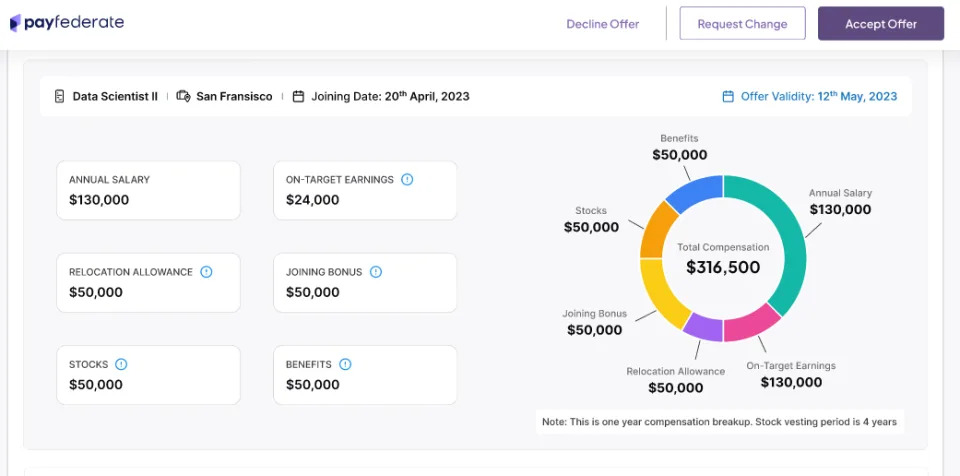
With payfederate, organizations can navigate the evolving market salary dynamics and adjust with legal requirements effortlessly. The platform provides comprehensive tools, real-time connectivity, and AI-driven insights, enabling companies to make informed decisions and maintain fairness and transparency throughout the compensation process.
payfederate tackles the root cause of pay disparities by connecting different pay decisions stakeholders from HR team, executives, employees to candidates. By integrating benchmarking data, real-time salary ranges, and advanced AI algorithms, payfederate empowers organizations to streamline their compensation practices, eliminate biases, and make precise comparisons across industries and companies. With payfederate’s real-time market data, companies can benchmark their compensation practices against industry standards, mitigating the risk of gender-based disparities or other discriminatory factors.
“The moment I realized there was a problem to solve in the compensation space began with a personal experience working in compensation space for decades,” shared Barkat Ali, Founder of payfederate. “As a software engineer navigating the world of tech, I witnessed firsthand the need for an AI-based architecture to address inconsistencies and disparities in pay. This realization sparked a fire within me, leading me to create payfederate-a company dedicated to revolutionizing compensation practices.”
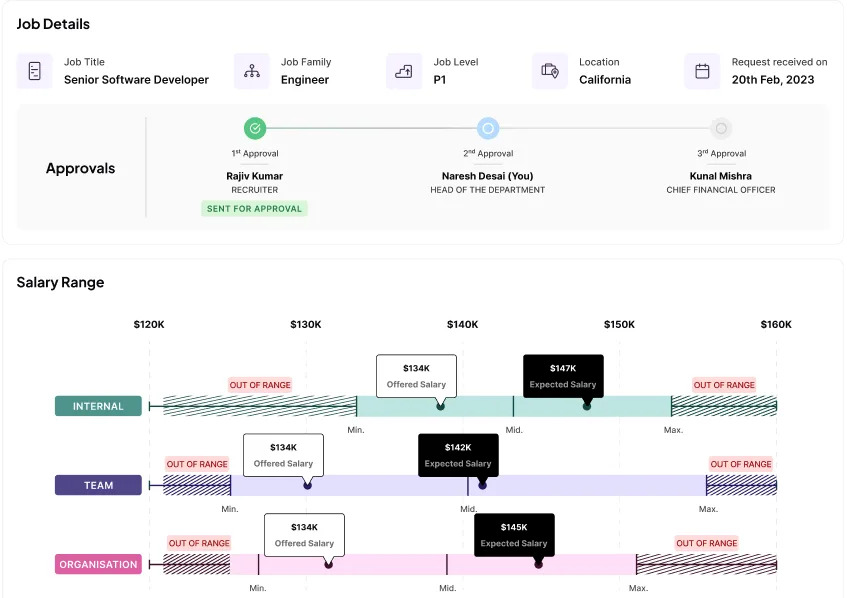
payfederate’s unique value proposition lies in its ability to connect disparate systems and automate decision-making, resulting in increased transparency, accuracy, and fairness in compensation practices. The platform seamlessly integrates with existing HR domains, ensuring collaborative and effective compensation strategies. Collaborating with other HR domains is essential for effective salary management, as noted by Josh Berin.

Barkat Ali’s dedication to driving meaningful changes in the compensation landscape is deeply rooted in his decade-long experience working with tech giants like Oracle and Taleo. Ali, passionate about revolutionizing the industry, also founded Compright – a leading compensation planning software that has since been acquired by Unit4. “Through extensive conversations with professionals in the field, we have developed payfederate as a comprehensive solution to bridge the gaps in existing compensation systems,” said Ali. “Our goal is to empower organizations, promote equitable compensation practices, and ultimately eliminate pay disparities. Together, we can create a fairer and more transparent future.”
payfederate’s launch represents a significant milestone in the quest for pay equity. As organizations embrace this innovative platform, they gain access to cutting-edge technology that ensures compliance with regulatory requirements, promotes fairness, and enables them to attract and retain top talent.
To learn more about payfederate and its mission to solve pay disparities through connected compensation systems, visit payfederate.com.